
Building a Stronger Energy Network
Why 765 kV?
The Midcontinent Independent System Operator (MISO), the regional transmission organization for Wisconsin, Minnesota and 13 other states, identified 765 kV technology as the preferred solution for strengthening the grid and meeting future energy needs because it:
- Delivers large amounts of power over long distances, improving the ability to move electricity across and within the region when and where it is needed.
- Carries more power on a single line than lower-voltage alternatives, helping support growing energy demand and future economic development.
- Requires fewer transmission structures, uses less land and reduces environmental impacts, to move the same amount of power, minimizing overall infrastructure needed to deliver electricity.
- Reduces electrical losses compared with lower-voltage transmission lines, helping more of the electricity generated reach homes, businesses and communities.
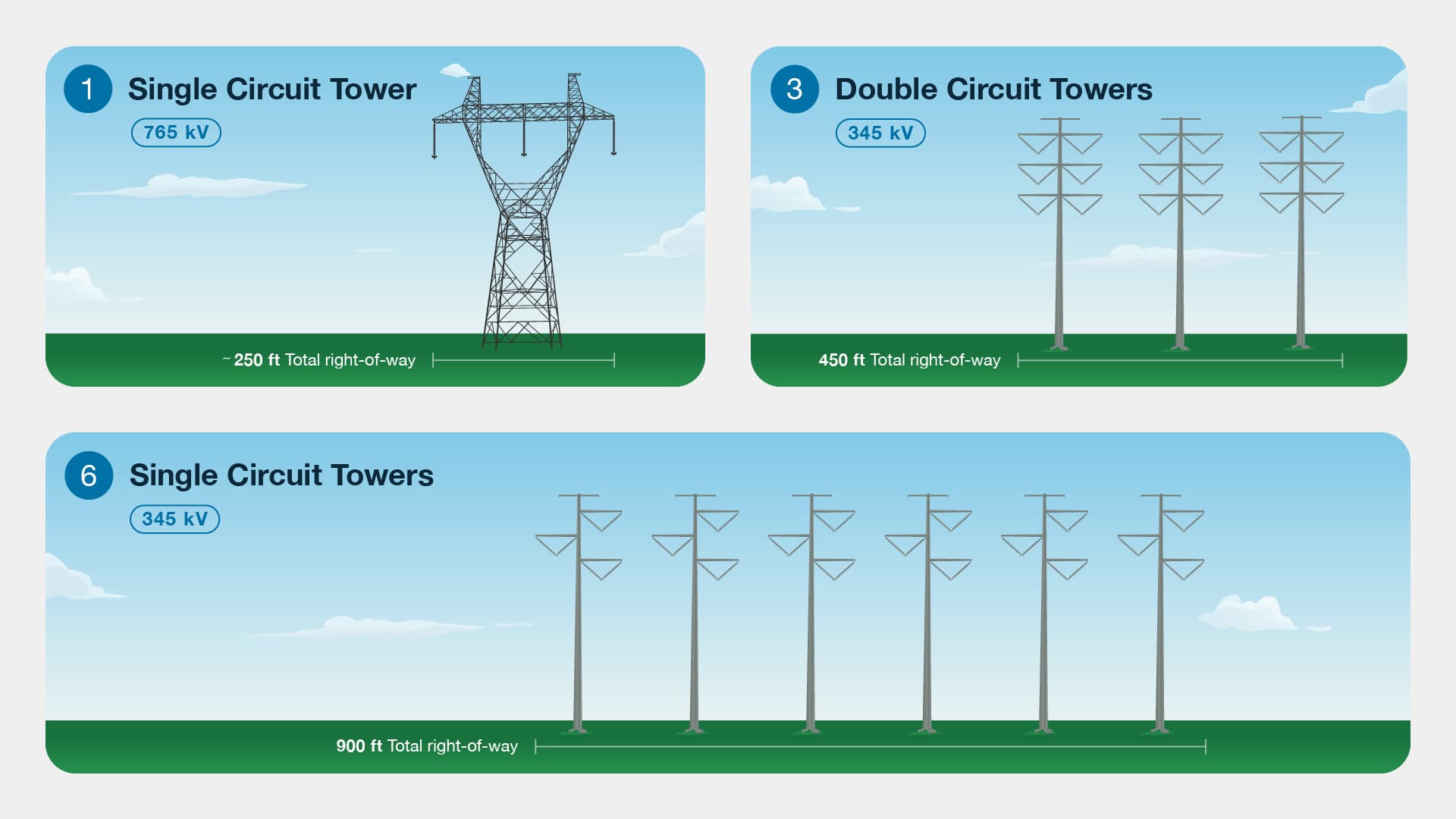
Built to do more with less
Preliminary engineering indicates structures will generally be 150-200 feet tall. The proposed route will use an existing transmission corridor to reduce impacts on land and communities. MISO's analysis found that a single 765 kV transmission line can carry the same amount of power as multiple lower-voltage lines, reducing land needed for transmission infrastructure by as much as 70-80% and therefore minimizing environmental impacts.
That means what?
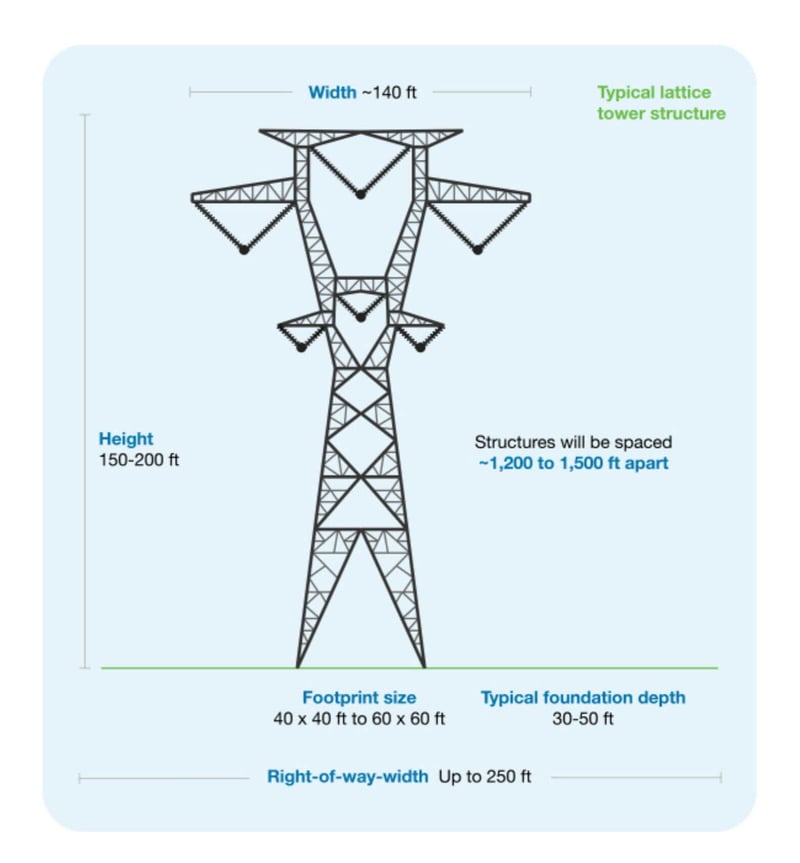
Disclaimer: The structure shown is a representative example of the type of structure that may be used for the MariBell Transmission Project. Final design and specifications are subject to engineering, environmental review and permitting.
Structures
The proposed MariBell Transmission Project consists of replacing an existing 161 kV transmission line with a new 765/161 kV double circuit transmission line, utilizing existing transmission corridors and right-of-way as much as possible. The double-circuit 765/161 kV self-supporting steel lattice structure would allow both voltage levels to be carried on a single structure.
Right-of-Way
The right-of-way is expected to be up to 250 feet wide to provide the space needed to safely construct, operate and maintain the line. The easement size is determined by several factors including electrical clearances, conductor movement, structure design, safety requirements, access needs and applicable engineering criteria. The easement provides the space needed to meet National Electrical Safety Code (NESC) clearance requirements and allows for crews and equipment to safely construct, operate, inspect and maintain the transmission line throughout its lifespan
Undergrounding Considerations
Why isn't the line being built underground?
Underground 765 kV transmission is not a viable option for the MariBell Transmission Project. There are no commercially operating, grid-connected 765 kV AC underground cable systems in the United States. Underground would still require frequent cable connections, access vaults, and significant above-ground equipment to support the system. Compared with an overhead 765 kV transmission line, underground construction for this project would:
- Require extensive excavation and ground disturbance
- Result in greater impacts to farmlands, roads, waterways and natural areas
- Require additional aboveground infrastructure to support system reliability and operation
- Increase the complexity of maintenance and repairs
- Significantly increase the cost of the project if the technology was available.
Overhead transmission remains the most reliable and cost-effective way to deliver the regional grid benefits for this project.
Drop us a Line
Do you have questions about the MariBell Transmission Project? Please email the team at connect@maribelltransmission.com or call 608-895-0799.
Click here to follow us on Facebook.